
FRANCE +33 (0)970 44 66 43 UK +44 (0)208 144 5501 USA +1 (0)870 619 4114 SKYPE - HHINTER
January 18th, 2010
NEW YEAR – GOOD NEWS FOR FRENCH PROPERTY

Although the global economic downturn has made the last 18 months hard for the real estate industry, France has benefitted from not having an overpriced market and a system that is more cautious and less gung-ho in terms of lending.
Areas such as Aquitaine and Languedoc Roussillon have ridden out the recession well with house prices down just 0.3% and 0.2% respectively. Alistair Lockhart, Sales and Marketing Manager at The French Property Agents (FPA) is also confident about the region. ‘We feel that the Dordogne will also make a comeback in 2010’.
According to recent reports well located houses in good repair, with pools, especially those along the coast on either side of Marseille will do well in 2010.
“Marseille and its ‘environs’ have become much more popular recently, especially for investors” said Francois-Xavier de Vial, Marseille based Director of Homehunts.
The provence coastline and Marseille is his top tip for 2010. ‘Marseille will see much regeneration work in the next few years, especially round the harbour area, this is definitely an area for the buyer, particularly the coastline to the west along to places like Cassis,” he added.
The FNAIM predicts the market to continue stabilising in the coming months, as do other official property bodies such as Notaires de France. The optimism stems from the fact that property prices are now at a more reasonable level of affordability, which most estate agents agree was a much needed price readjustment and envisioned would happen in 2009. Few believe that the price falls will continue during 2010, with many foreseeing a period of stabilisation. Early 2010 could be an optimum time to buy with agents advising British buyers that buying in the current market – if indeed prices have bottomed out – should more than compensate for the weak pound.
As for picking up a bargain in 2010, the general opinion has been that most properties have already had their asking prices reduced and new vendors are likely to price their property accurately so there may be less opportunity to negotiate. Nevertheless, French property in 2010 is likely to be the most affordable for many years.
In 2010 the government and banks can play a major role in restoring buyers’ confidence; this has already started as a result of greater lending from banks and an emergence from the recession in France, but tax reliefs, rebates and other government incentives could further heal the confidence of potential buyers, which is certainly needed to initiate a full market recovery.
*Predictions from Notaires de France’s October 2009 report and the FNAIM’s November 2009 letter/source Property wire.
HIGH FLYERS
Irish airline Ryanair has revealed that its passenger numbers jumped 13 percent last year to 65.3 million, placing the low-cost flight company on track to overtake Air France-KLM, Europe’s biggest carrier.
Ryanair also said in a statement that the number of passengers rose 12 percent to 4.9 million in December 2009, compared with the same month of the previous year.
“As our December traffic shows, Ryanair is growing strongly and remains on course to carry over 66 million passengers in the current fiscal year,” said Chief Executive Michael O’Leary.
Ryanair currently operates to over 10 aiports in southern France including: Nice, Toulon, Marseille, Carcassonne, Perpignan, Montpellier, Nimes, Beziers, Bergerac, Biarittz, Bordeaux and Pau.
FRANCE BOOSTS BENEFITS FOR FOREIGNERS WORKING IN FRANCE
Changes to rules concerning foreigners coming to work in France have further enhanced their favourable tax status and broadened the scope of those who are eligible – provided they have not been French tax residents in the five years preceding their new appointment.
Under the old regime, the tax authorities allowed certain categories of employees and officers temporarily assigned to work in France to be exempt from tax, for a maximum period totaling six years. 
Under the new regime, more people benefit as it now includes those who are recruited directly from abroad to any company established in France (not just internal mobility within international groups as before). Those who are eligible now have a choice between either:
1. a total exemption of the “impatriation” bonus, or 2. a lump sum exemption of 30% of their salary. In addition, all benefit from a total exemption (not 20% as before) of their “expatriation” bonus, provided the activity (travel, etc) is directly and exclusively in the interests of their employer/host entity in France. These latest provisions apply (retroactively) to those who relocated on or after1 January 2008, and apply for a maximum duration of six years.
French wealth tax: those who have not been French tax residents in the five previous tax years will also be exempt from wealth tax on their non-French assets up to the 31 December following the fifth anniversary of their arrival in France.
For more information on any tax issue in France please email us and we will be happy to assist: info@home-hunts.com
7TH HEAVEN

It’s true that the 7th arrondissement is considered one of Paris’ most elegant residential areas. Luxurious townhouses, government ministries and embassies abound – setting up home in this area is one step closer to heaven.
And it is also one of the richest neighborhoods for certain other luxuries in life like art and antiques. Strolling around rue de Beaune or rue de Verneuil is like taking a walk through a French history book. The multitude of highly competent antique shops and galleries display century’s worth of artistic tradition and heritage.
The best time to discover the 7th is during the week because if you decide to go gallery browsing on a Saturday strangly enough a good many of the shops will be closed. If you are looking for great shopping in Paris, it doesn’t get much better than the 7th. 
From the very upscale department store, Le Bon Marché on the rue de Sèvres to the irresistible home furnishings shops along rue du Bac not to mention the antique shops and art galleries behind Boulevard Saint Germain.
The best that Paris has to offer is at your fingertips. The exquisite salon du thé at the Musée d’Orsay has a fabulous view overlooking central Paris, plus the Art Nouveau furniture collection downstairs.
Since the 7th arrondissement is so elegant and wealthy, it is only fitting that many of Paris’ best residences and restaurants are found here. Le Voltaire on the Quai Voltaire has been owned by the same family since the 1930’s and a recent opening of Café Constant by Christian Constant of nearby “Violon d’Ingrès” fame has also taken the area by storm. (139, rue Saint Dominique)
The restaurant/cafe L’Esplanade at the corner of rue de Grenelle and rue Fabert around 7pm in the evening is a fabulous place to watch the sun set over Les Invalides, you definitely feel like you are on top of the world.
For property in the 7th Arrondissement, the area is made up of four residential quartiers. It is located at the south bank of the Seine River and shares borders with the 15th arrondissement in the south, the 16th, 8th and 1st in the north, and the 6th arrondissement in the east.

Quartier Saint-Thomas d’Aquin: a very aristocratic area which is home to many famous people. The quarter is also the one which houses more old prestigious hotels, nowadays transformed into Universities, private schools or offices.
Quartier des Invalides: this quarter was named after the famous monument Hotel des Invalides. The Palais Bourbon, the Chamber of Deputies, is also to be found in this quarter.
Quartier de l’Ecole-Militaire: this part is rather “cold” area in comparison which houses more administrative buildings than residential ones. A large part of the area is covered by the Military School, after which it was named. The quarter also displays some nice houses of Louis XIV, Louis XV and Louis XVI architectural style.
Quartier du Gros-Caillou: this quarter is much livelier as it houses the Eiffel Tower. Before 1860 the area was a suburb with the same name. The area developed a lot thanks to the Universal Exposition and the construction of the Eiffel Tower. The 7th arrondissement is the second most expensive in Paris, after the 6th (its neighbour)
 
The 7th arrondissement includes two locations with breathtaking views: top floor apartment residents along the Eiffel Tower “Champs de Mars” and “Esplanade” where residents enjoy the nearness of the golden Invalides dome and the stylish Alexandre III Bridge over the Seine.
Undoubtedly the most expensive quarter is Saint Thomas d’Aquin which is a very aristocratic area. Some narrow lanes in the vicinity of the “Champ de Mars”, for example avenues “Charles Floquet” and “Elisée Reclus”, are particularly highly sought after by people seeking a quiet and green neighbourhood.
Triplex property for sale – Champs de Mars: triplex of 480 m2 on the champ de Mars with a private garden of 200 m2 just in front of the Eiffel tower. This exceptional residence offers 9 rooms including 5 bedrooms with their own bathroom and garage parking for 7 cars. Price on request.
 
(above) Privileged address, brightness, peaceful are the keywords for this charming luminous apartment of 102m² located at the 3rd floor of an old stone sized building. Excellent condition: entrance gallery, double lounge, US kitchen, two bedrooms (possible for 3) bathroom with window, numerous built-in cupboards. Possibility to purchase a parking space close to the apartment. Price. 1,130,000 euros.
PLACE VAUBAN (FACING DOME DES INVALIDES) Superb 3 BEDROOMED apartment (below) very large reception ( 100m²) kitchen with breakfast room, 3 bedrooms , 2 bathrooms , shower , parking place. Price: 3,200,000 euros
 
Because of its prestigious address and the confidential wishes of owners, many properties are not advertised, however we have a number of stunning properties available in this area so if you are looking for this, or any other district of Paris, please email us and we will be happy to discuss your search. info@home-hunts.com
Photo credits:
Boulevard de Tour Maubourg © Marie-Lan Nguyen / Wikimedia Commons
www.lameredefamille.com, eiffelparis.com, www.parisperfect.com
IN AT THE DEEP END

Pools are like people – they come in all shapes and sizes. Properties in the south of France are definitely increased in value when there is a pool, because of the climate and the way of life, they are almost a necessity. For children especially there is nothing nicer than diving in and spending much time jumping in and out of the water to cool off.
If you decide to buy a property that doesn’t already have a pool, or would consider changing the existing pool then the cost of installing a pool varies considerably and depends upon some fairly fundamental factors that need to be decided at the outset.
Firstly, you need to decide whether your pool will be above ground or in the ground.
Above ground pools (hors sols) are available as kits from DIY stores and larger supermarkets in France and are becoming increasingly popular. They’re not subject to any form of planning permission because they’re classified as temporary structures, they don’t incur tax and they’re not subject to the new safety regulations (although, if you have children, safety will still be your priority).
They’re quick and cheap to install because there’s no digging necessary, no concrete to pour and the plumbing and electrical connections are very straightforward. An above-ground pool, however, is not as aesthetically attractive or durable as an in-ground pool, since they are so easy to install, they have no investment value. Some are however dug part in the ground which makes them more practical and attractive.
For the true lifestyle experience of a pool, you need an in-ground swimming pool. An in-ground pool is still the right choice for anyone who thinks of a pool as more than a means to cool off.
Whilst in-ground pools are subject to some regulations, at the time of writing, the requirement is for a pool less than 10×5, the lesser declaration de travaux and not the full-blown permis de construire. The form that you will need is available from your local town hall. The approval can take anything from a couple of weeks to a few months, so allow plenty of time. You can start some of the preparation work whilst awaiting approval but don’t start serious work in case they ask you to alter the location of the pool.
The second important decision is whether you intend to do the work yourself or pay a local contractor. If you’re fit, strong, and used to carrying out large DIY projects and you have the time, doing the installation yourself will save a huge amount of money. However, if you’re concerned about the scale of the project or want it to be completed within weeks rather than months, then go for a prêt à plonger installation. If you decide to go it alone, there are parts of the project for which you’ll need professional help, such as the terrassement (excavation) and a truck load of beton (concrete) when you’re ready to create the floor of your pool.
The fibreglass shell pools are often seen displayed on the outskirts of towns propped up against buildings. They look impressive and there’s an attraction to the idea of not having to create walls or a floor for your pool and not having to fit a liner. However, there’s a limit to how big these shells can be manufactured and compared to kits, they’re quite expensive.

The most popular choice is the kit. The wall panels are usually made from stainless steel or aluminium, but increasingly in composites. One of the latest developments is walls that you build with hollow high-density polystyrene blocks – once you’ve got it the way you want it, you fill the cavity with concrete.
If you’re going to build your own in-ground pool, going for a kit provides a good compromise between ease of construction and price.
Anyone who has an in-ground pool will have to consider a suitable safety option. The most expensive by far is the shelter, or abris, which usually looks a bit like a telescopic greenhouse, which most people rule out on grounds of price and aesthetic appeal.
At the other end of the scale is the alarm – they cost just a few hundred euros, but are sometimes very sensitive because of false alarms every time a twig falls in the pool.
A cover (those electric roller cover) is possibly the most effective device from a safety perspective and negates the need for winter cover (which you would need anyway), but does take a few minutes to open and close each time you leave poolside. A cover for a standard 10m x 5m pool will cost about €1,200 to €1,500.
The most popular solution is the barrier as it’s the easiest to use and relatively effective. The fences are quite expensive – you should allow about €80 per metre of fence, which doesn’t sound too bad until you work out how many metres you need and do the sums.
So what are the approximate costs:
Pool Kit (including security cover): €8,500
Electrolyser €500
Excavation €750
Coping slabs €750
Concrete €500
Tools, bricks, sundries and water €1,000
Total Cost: €12,000
Value Added: €45,000 to €50,000 approx
The going rate for contractors to do the job for you is between €25,000 and €30,000 for a similar sized installation so, even if you go this route, you could still almost double your money.
From a lifestyle aspect too, the pool is a great asset. The summers here are long and hot and without the pool to cool off, it would be impossible to stay outside through the afternoons.

Quite correctly, the French government responded by introducing a set of regulations that came into force for new swimming pools from 2004 and applied to all swimming pools by the start of 2006. There was a considerable amount of confusion over the precise details of the regulations (which were published once, then revised and then revised again) and the effective dates. Now, however, the regulations are clear and are in effect for all outdoor, in-ground pools (they do not apply to indoor or above-ground pools).
The law states that you must comply with one or more of the following 4 standards before you fill your pool with water:
■NF P90-306 A Safety Barrier (Fence)
■NF P90-307 An Alarm
■NF P90-308 A Safety Cover
■NF P90-309 A Shelter
Whichever one you choose, you have to make sure that the device complies with the standard, which usually means that it displays the NF number. You are also required to ensure that the device is functional, correctly fitted and used appropriately. The penalty if you are discovered to have a non-complying pool is €45,000!
In terms of the value it adds to your house, a pool is the best possible feature to introduce – selling your property later will be far easier if the pool is there. House hunting is most popular in early spring, so with the thoughts of the coming summer, a house with a pool is an attractive proposition. A 10m by 5m in-ground pool, if it’s nicely finished with an adjacent terrace will add approximately between €45,000 and €50,000 to a property.
FRANCE VOTED BEST PLACE TO LIVE FOR 5TH YEAR RUNNING

For the fifth consecutive year, France has been selected the best place in the world to live by International Living magazine, a US-based lifestyle magazine for retirees wishing to travel or live abroad.
The magazine, which has been conducting the survey for 30 years, rhapsodized about France on its website: “Its tiresome bureaucracy and high taxes are outweighed by an unsurpassable quality of life, including the world’s best healthcare.”
The magazine declared, “You don’t need number-crunchers to tell you its bon vivant lifestyle is special.”
International Living based its ranking on a point system, with each of the 194 nations being graded based on nine categories: Cost of Living, Culture and Leisure, Economy, Environment, Freedom, Health, Infrastructure, Safety and Risk, and Climate.
The US came in at number seven (down from third place in 2009’s rankings, which, according to the magazine’s editors, was due to increased hardships in the US following the financial crisis), and the UK came in at 25th.
www.internationalliving.com
Tags: buying property in france, property in paris, property in the 7e arrondissement Posted in January 2010 Newsletter | Comments Off
January 14th, 2010

For many buyers and owners finding a reliable and superior design company to help realize their plans is not always easy.
FG design is an original and dynamic Interior Architect Studio made up of two sister companies which undertake projects of full design and project management services to complete construction and renovation.
The company was created in Saint Tropez more than 13 years ago, and has since carried out over 200 projects. Founder and CEO, David Florentin is an interior architect trained at the famous French Boule School and had extensive design experience before creating his own companies.
FG Design brings to life complete projects for their customers – Interior, Exterior, Furniture, Decoration, Garden & Pool and are totally committed to delivering perfection to their customers through their business ethic of ‘High quality, On Time and On Budget’.
The high-end residential market and luxury hotels are their two main areas of expertise but they also work for corporate groups like Air France, BTP Pro designing Vacation centers, camping areas & restaurants.
Today the FG DESIGN team includes 8 designers and the rest of the group’s 30 members have skills among the following fields: Legal, Accounting, Translation, Masonry, Plumbing, Heating-AC, Plaster, Tiling, Painting and Carpentry.

They pride themselves on their international understanding with more than 6 different nationalities on board the team. One of their main objectives is to compliment their large number of international clients, not only in terms of languages but also in understanding the cultural differences.
They have 3 different showrooms, and a total of 5 working sites: Saint Tropez (Below), Port-Grimaud, Grimaud, Valbonne, and Paris which allows them to be able to manage projects everywhere on the Côte d’Azur and in Paris.

Another important part of the company is carpentry and managing furniture projects in foreign countries like the UK & Switzerland.
Their Paris showroom, (Below) is their largest and most recently opened in the quartier Saint-Germain, a wander around the showroom is an excellent way to view examples of their Bespoke Furniture creations.
Managing Director, Stephane Liegois says “We design, make and assemble our own bespoke furniture for our customers. For example, kitchen cabinets, dressing units, bathroom furniture, bookcases & tables… that fully match and often define the design and style of the house or apartment of our clients. These pieces combined with a harmonious design create added value for our clients and their property.”

They have a very detailed and regular contact with their clients from start to finish, from the first contact with a designer where a few sketches are drawn in front of the customer in order to explore project potential to the final finished work. Budget considerations are also addressed to measure project feasibility as compared to the customer’s ambition.
Zeph Neil, the company’s Senior Designer says: “We always work in the direction of our customers wishes in terms of design. Our team is multicultural so we are able to put the right designer in front of a specific client requirement. Of course we work a lot with the classic and Provencal style where the French touch is famous but also in more contemporary as well as very modern design approaches.”
Among the many recent works they have done, Zeph describes one which was a particular favourite, “Last year we completed a very exciting project for an English client.

It was a renovation of a 600 m2 villa in the Alpes-Maritimes with a bold interior design combination of Provencal and modern styles, including a large leisure space composed of a home-cinema room, spa, fitness center and a wine cellar. This project was for us the ‘perfect project’ since we managed absolutely everything from masonry work to curtains installation, without forgetting security, audio, video, home automation, pool… a fantastic project for a fantastic customer.”
STEPHANE LIEGEOIS

ZEPH NEIL

David Florentin – CEO
david.florentin@fgdesign.fr
stephane.liegeois@fgdesign.fr
zeph.neil@fgdesign.fr
Tags: Interior design, paris interior design, south of france interior design, st tropez interior design Posted in January 2010 Newsletter | Comments Off
January 13th, 2010
International spirit meets French Riviera

Valbonne and Mougins are both villages which are extremely popular with buyers looking for either a second home or a permanent residence on the Cote d’azur. For many years it has been a favourite destination and it is no wonder- this upmarket area has much to offer.
Both the villages are very beautiful, having inspired some of the world’s most famous artists such as Matisse and Picasso.

Strolling through the cobbled streets, to pick up your morning ‘baguette’ and paper there is always a feeling of something going on. Immediately you feel embraced by the core essence of the French way of life, something that many buyers wish for when coming to live in France.
At the end of the 19th century the climate and geographic position of Mougins drew a number of celebrities such as Cocteau, Edith Piaf, Christian Dior and Yves Saint Laurent who all came to holiday here. In the thirties, Célestin Véran, a self-employed fisherman who also piloted a sea taxi, organised and cooked bouillabaisse for celebrities such as the Duke of Windsor.
Nowadays, during the International Film Festival in May, stars from all over the world come to visit Mougins. The most important gathering of the annual Film Festival takes place at “Le Moulin de Mougins” and is organised for the benefit of medical Aids research. Many stars such as Sharon Stone and Elton John participate in this annual event, with Elisabeth Taylor presiding and AMFAR organising.
Walking through the old village of Mougins is like going back in time and there are plenty of little streets filled with charming shops and boutiques. It is a village that is synomymous with pleasure: gastronomic pleasures with highly-renowned restaurants, the pleasure of a golfing destination of exceptional quality and the pleasure of the arts with artists’ studios, galleries and museums.
Mougins is home of many prestigious restaurants such as “Le Moulin de Mougins” and “Le Restaurant Candille”. One can also enjoy lesser-known establishments which offer a warm welcome and excellent cuisine, whether traditional French or Provençal.
In 1936, before moving to Mougins, Pablo Picasso stayed at the hotel “Vaste Horizon” (now Les Muscadins). As the story goes, one night Picasso painted every wall of his room, only to face the wrath of the hotel owner who made the unknown painter cover his work with white paint the next day.
This did not discourage Picasso, who settled permanently in Mougins next to the chapel of Notre Dame de Vie where he lived out his last days. Many contemporary artists have followed in his footsteps. You can rub shoulders with artists and visit 20 or so galleries and workshops while strolling through the flowered streets of the old part of town.
Le Petit Fouet, is a fantastic restaurant and wine bar that offers the “crème” of crème brûlée, and if you get the chance try their blind wine tasting, which must be very interesting – they use black glasses so that you can’t even see the color of the wine.
Karen Hockney an entertainment journalist/writer from London left London in 2008 to settle close to Valbonne. Her move was prompted by a desire for a better quality of lifestyle: “We had an apartment in Mandelieu-la-Napoule which we used for holidays and every time we came down we never wanted to go back home again.” says Karen.
“We had also spent years on the London treadmill, me travelling a lot on showbiz jobs all over the world and my husband working long hours in the City and while it was a great lifestyle, we were always running to keep up. We wanted to slow down, spend more time together and enjoy the girls before they flee the nest so we sold up in the UK and bought a house which needed loads of work.”

Karen loves the international feeling of this part of the Riviera: “Valbonne is 12 minutes drive from us and has the values and chocolate box appeal of an old French village while also boasting a strong international community, particularly the English, Dutch, Scandanavian and Americans. Having a daughter at the international section of Fenelon in Grasse has also helped us to meet other Brits, although we have French, Dutch and Scandanavian friends too”
Her favourite places to eat out contains a long list but her top recommendation is: “Definitely Chez Grand-mere in Tourrettes-sur-Loup is my all time favourite, and it’s not break the bank expensive but gets very busy. La Menthe Douce in Mougins has a great Moroccan garden, good food and belly dancing too!”
Concerning Property prices, Karen feels there is a wide range of opportunities for many buyers: “Property prices have become more realistic here in the last two years. Pockets like Valbonne and Mougins will always retain high prices because of the proximity to good international schools but the villages just outside Valbonne and Grasse are good value. If you are prepared to do some work, there are some great old stone Mas which you can put your mark on and see a good return.”

Both Valbonne and Mougins offer great facilities, all local shops, gyms, tennis etc – everything you could want really is never more than a walk or short drive away. Nice international aiport is less than half an hour away, and there are three excellent international schools close by: The Mougins School, Fenelon and CIV in Sophia Antipolis. Sophia Antipolis, the Science and Technology Park, has many of the world’s major companies (such as IBM, Toyota, American express etc) with many international employees and families living in the surrounding areas.
Not wishing to brag about the weather, but yes ok it can, the climate is a real attraction because of more than 310 days sunshine per year. The villages are close to the beaches of Cannes and other coastal areas, but far enough away so that you can get away from the crazy traffic during the summer. If you are a skier, then a 45 minute drive in the car and you can be choosing between black and red runs of the nearby Alps and ski resorts.
 
Private and less blingy than its Riviera neighbours from places like St Tropez, many celebrities, footballers and actors have homes here. Everyone is a little quieter but not so much so that the international culture and atmosphere is suppressed.
The main ‘Place des Arcades’ in Valbonne is a great place to have lunch and do a bit of people watching and Le Cadran Solaire is a pretty restaurant serving great food. 
HOMEHUNTS recently opened an office in the village of Valbonne to compliment its head office in Marseille. Tim Swannie, one of the directors who is based in Valbonne says: “We wanted to have a presence on the Riviera so we could receive our international clients and Valbonne seemed like the perfect location.”
Perfect indeed, international spirit interwoven with authentic French culture. Parfait.
photo credits: office de tourism valbonne/mougins, les muscadins.
If you are interested in discussing your search for properties in this area then please email us on info@home-hunts.com
 
Situated in an excellent location close to the lycee this property (above) has been completely renovated with refined materials and taste. With lovely sized rooms leading onto the terraces and gardens this property offers excellent value for money. Price: 999,000 euros
 
(above) This is situated in the Penyblou area which is less than 1 km from the Valbonne village. Recently reduced this is a fabulous opportunity for the location, the view and the size of land. Price: 1,950,000 euros
 
(above) Situated in the famous Domaine de St Basile of Mougins. Charming bastide in a very sought after area between Mougins and Valbonne. Excellent area for the Mougins school and other international schools. The property has also been reduced and could benefit from some modernization and upgrading. Price: 780,000 euros.
 
(above) This is in a prestigious Domaine called Parc de Mougins and has been superbly renovated. Price 2,750,000 euros negociable.
 
(above) Authentic old mas from 19th century, benefiting of a superb view to the sea, set on a quiet and residential area. The main house is about 260 m², and composed of 4 bedrooms, 3 bathrooms, a spacious and full of light living, a separate fitted kitchen. Outbuildings of about 96 m² with 2 bedrooms and a bathroom. Garden of 4367 m² well landscaped with swimming pool. Price: 2,190,000 euros.
 
(above) Valbonne 2 steps from the village, detached villa on one level with a large living room, kitchen, 3 bedrooms, 2 baths, office. Flat ground of 1500 m² with swimming pool, basement of 80 m². Price: 940,000 euros.
Tags: lifestyle riviera, property in mougins, property in valbonne Posted in January 2010 Newsletter | Comments Off
January 13th, 2010
Rooted in the rural French countryside, or on the edge of a scenic little village, the French country farmhouse opens its wooden, welcoming doors to all who step inside.
 This ever popular style oozes rustic warmth and its design includes curved arches, soft lines and stonework. Inside, you’ll find wooden beams, plaster walls and stone floors and if you close your eyes it is easy to imagine the the smell of the log burning stove and the feel of the sun-warmed stone tiles beneath your feet.
It is not only the actual farmhouse properties which are highly sought after; French Country Farmhouse has evolved into one of the most popular styles of interior design around the world. The look is casual, inviting, and fuss-free – the charm lies in the bucolic feel of the furniture and accessories.
French Farmhouse interior design styles have an eclectic character of mix and match, use what you have and find a new use for an old item.
  
French Farmhouse allows a large velvet sofa with a ‘shabby chic’ fauteille chair and a Louis XIV armoire to sit together without any hint of a mismatch. All items that are well loved and still meant to be used and not to be put in the jumble sale or a museum. The colours and patterns are a mixture of bright blue, red and yellow of Provence used next to two-tone toile’s and silks of Paris.
Dibor, specialise in French country Farmhouse furniture and their high quality plus wide range of everything you could wish for is available to order from their recently re-launched mail order.

This family based business is passionate about their stunning collections and there are not only large pieces of furniture but lots of fabulous ideas to accessorize and decorate your home.
The interior atmosphere always seems to tell a story, little touches of ‘brocante’ pieces that are too nice to throw away; not quite junk not quite art are placed throughout various rooms. Wire bird cages, cast-off egg baskets, rustic ladders and garden trellis all find safe haven in a French Farmhouse.
The centrepiece of any French farmhouse kitchen is the table which was originally made to accommodate the farm workers who would dine together, a traditional French country-style dining table seats from six to twelve persons. Large kitchens lead to open-fireplaced living rooms and terraces offer the entertaining outside space that families and friends can enjoy.
Many British peoples ‘love affair’ with French Farmhouse started well over 20 years ago– today buyers are still searching for a place in the ‘campagne’ where they live, breath and experience the wonderful villages and scenery across the south of France.
Stephanie Browne, owner of a country farmhouse in the Languedoc-Roussillon region of France rents her property throughout the year and confirms that 2009, despite the recession, was their best year to date. Buying a farmhouse to rent is one of the most popular searches.
  
This character house has exposed stone and beams, fully equipped kitchen, private drive and parking and provides everything needed for a relaxing and enjoyable place to stay during your property search. www.laterrasse-france.com
www.dibor.co.uk
www.leshiboux.com
Photo credits: Stephanie Brown, Richard L. Harbus, dibor.co.uk, erica – www.meadowstreet.com
If you would like to receive more information on a full list of farmhouses anywhere in southern France, please contact: info@home-hunts.com
ROQUEFORT LES PINS: All of Provence wrapped up in this beautifully renovated stone farmhouse, which has maintained its old world charm whilst offering high quality appointments in an elegant, subtle decor.
 
Surrounded by over 3 acres or 1.7 hectares of gently sloping, park-like gardens with endless olive trees, fruit trees and flowering Provencal shrubs, the property enjoys complete quiet and tranquility with unimpeded views over the countryside.
 
The farmhouse provides 5 spacious bedrooms, fully equipped country kitchen with large dining area, sitting room, study, 2 salons, and independent guest apartment. Hidden in the greenery is the vast swimming pool with summer kitchen and pool house. There is also the possibility of further construction on the land. Price: 5,000,000 euros
LUBERON: Close to Cavaillon and the very beautiful village of L’Isle sur Sorgues this provencal farmhouse dating back to the 14th century has been entirely renovated with a living space of 360m2 with an enclosed gardens of 3600m2.
 
Situated in the countryside close to the famous antiques town, this farmhouse makes a perfect country home. There are also outbuildings of approximately 153m2. Price negociable: 1,260,000 euros.
ARGELES SUR MER: Located in a protected rural area only 1km from the beach, this is an exceptional XVIIth stone farmhouse for sale. This 350m² stunning property is divided into 5 apartments all of which are entirely restored and rented out on a yearly basis.
 
It is split into 2 x 1 bed apartments, 2 x 2 bed apartments and a large 3 bed apartment of 145m² with stone walls, wood beams and a fireplace. The property has a lovely setting in a large garden of 1200m². A rare opportunity for an up-and-running gite business on the coast. It could also be converted into a large private property with B&B/guest accommodation. Price: 1,040,000 euros.
LORGUES:
This stunning farmhouse with 280m2 of living space has recently come onto the market.
 
Surrounded on just over 5 hectares of land it offers 5 bedrooms, 2 reception rooms. Price: 1,300,000 euros.
LES ALPILLES
Close to St Remy de Provence and Avignon, this beautiful XIXth century farmhouse has recently been renovated with taste, using first class materials and is absolute perfection, combining a classic farmhouse atmosphere plus elegance, space and charm.
 
It has 400m² of living space and 8800m² of garden, plus 50m² of outbuildings to be converted and is totally securely fenced. Price: 1,362,000 euros.
SOUTH WEST FRANCE – PERIGORD
Located on top of a hill, with gorgeous views over rolling countryside, this outstanding fully renovated stone farmhouse ideally combines authenticity and comfort.
 
A little piece of paradise a few minutes drive to a lovely medieval market town with all amenities. Price: 1,144,500. euros
Tags: french country farmhouses for sale, french farmhouse, french farmhouse for sale, luxury farmhouses for sale Posted in January 2010 Newsletter | Comments Off
November 30th, 2009
DON’T BE S.A.D
As the winter months approach for some it is the season to be jolly, head off to the ski slopes and embrace the change in temperature. However, for an increasing number of people, the onset of grey days in the UK and many European countries, trigger serious depressive symptoms.
 Also known as winter depression or winter blues, the US National Library of Medicine notes that “some people experience a serious mood change when the seasons change. They may sleep too much, have little energy, and crave sweets and starchy foods. They may also feel depressed and a lot is due to the lack of sunshine and a change in the light and length of daylight.” An estimated half a million people in the UK suffer from the disorder which affects most people between December and February.
Once the trees have lost their leaves, it’s raining; the rare winter sunshine has to fight through grey skies: that’s when the winter blues descend. Life doesn’t have to be dreary – not when you can pop across the channel for a little sunlight burst and enjoy the blue skies and winter sunshine in the south of France.

The climate in winter is one of the best in the Mediterranean, mild during the day, with over 300 days of sunshine; it is warm enough in the winter to be able to wear a shirt during the day and a sweater in the evenings.
It is undoubtedly a different kind of light, a sunlight which is still intense and a short winter break to the Riviera or Provence coast is the perfect way to beat off the winter blues.
Nice – Price: 750,000 euros
 
Antibes – Golf Juan – Price: 599,000 euros
 
Le Lavandou – Price: 792,000 euros
 
If you would like a selection of properties for you to escape to then please email us with your criteria: info@home-hunts.com
WHAT CAN I GET FOR 3 MILLION?
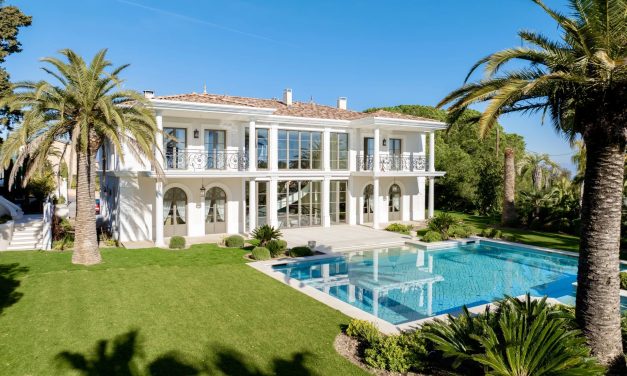
GASSIN. Near to the sea, this property is conveniently situated in the centre of the Bay of Saint Tropez.
Built in a neo-provençal style, this house comprises: living/dining room and separate kitchen which all open out onto a large covered terrace with a barbeque, pantry, and three bedrooms including the master bedroom with a full bathroom.
 
There is an independent guest house comprising of a living room with an open plan kitchen, two bedrooms and a full bathroom. The house is very open to the exterior thanks to its large sliding windows. It has been designed to allow you to enjoy the garden, the heated pool and the pool house even in the cooler months of the year. Price: 2,950,000 euros
PARIS: Paris 16th Trocadero gardens.
 
On the top floor of a Haussmann building, a 171 m² apartment perfectly renovated and equipped with a gorgeous view over the Eiffel tower and the Seine River. Lock up garage on the ground floor. Price: 2, 625,000 euros
AIX-EN-PROVENCE: Situated on the vineyard trail, on the immediate outskirt of Aix en Provence, a priory dating back to the Roman era – approximately 750m² living space with a roman chapel and an interior courtyard.
 
The land of 3.9 hectares planted with centenary trees – pool/pond. A real quality renovation. Price : 2,850,000 euros
COTIGNAC : situated in the middle of the hills and overlooking the mountains, magnificent property of 5500sqm with swimming pool, pool house and outbuildings.
 
The land includes a superb house of 600sqm benefiting from a lovely terrace giving onto the mountains and includes an entrance hall, a laundry room, a store room, a mezzanine, a kitchen, a living room with fireplace, a dining room, 6 bedrooms, 4 bathrooms and a cellar. This incredible property is the perfect place to have some rest and for nature lovers. Price: 3,000,000 euros.
VILLAGE PEOPLE
For many people moving and looking for a place in France, being in or close to a village is one of their top search requirements. There is something quite intimate about being part of a village – situated in the midst and centre of the daily life in southern France provides an instant insight in the community spirit. Speaking the French language is definitely one of the most important things to do. Even if you only speak a little French, do use it and your efforts will be much appreciated. The French love to hear the English try their language and many French people will agree with you, their language is “tres difficile”.
One way of making French friends and start integrating into the village life is to start going to the “Boulangerie and Boucherie” at the same time each day or at least regularly from the same place. This way you will see the same people and you will be recognised, it is also a good way of using your French! Purchasing “un pain” in France can take the average person quite some time when walking in the village, stopping off chatting to friends and acquaintances.
Many French people do their socializing in the village streets and not in their homes, so if you want to get in with local go out onto the streets. Throughout the year, many French villages have various fetes, lotto’s and markets, it is a good idea to become involved in the village activities and be seen at the events.
Throughout France there are approximately 36,000 villages and it is undoubtedly the village way of life that defines France and its ‘savoir vivre’. To date, 152 villages are part of the association of the famous title “Les Plus Beaux Villages de France” (The Most Beautiful Villages of France) which requires these villages to have less than 2000 habitants. There are also 27 other strict criteria based on things such as value, diversity, quality of architecture and a wish to create excellency in the village.
Kirsten Pollard, Homehunts manager for the Aquitaine, moved to France from London six years ago. She describes why for her and her family, village life was the best decision:
“Moving to the south of France is for many about a living a rural idyll, tucked away in the peace and quiet of the stunning countryside, but after spending our first summer living here in the coutryside, we decided that for daily living throughout the year, being in the village was our preferred option. Although I grew up in the countryside, having moved here from London, we liked to have the hubbub and sociability that living in the village has. We chose the village of Saint Cyprien, a medieval hillside village in the Dordogne valley that my partner knew from a child as his Grandfather had moved here in the seventies.
 
We live in the medeival quarter of the village and we have enjoyed being integrated as part of the community here, who are pleased to have people moving in, specially families with children ( we have 3), who add life to the quartier, and become substitute’s to their own children and grandchildren who have moved off to lead their lives elsewhere.
For many years the population of the villages was steadily decreasing, but now it appears that there has been a turn around and many more people moving in – both French from other parts of France and foreigners. The locals seem to appreciate that this influx brings new life to the village as they often renovate previously derelict houses, open businesses and shops, and put their children in the schools. We appreciate the authenticity of the village life here that is all year round, not just overcrowded in the summer. Here they really do live that mythical laid back southern French lifestyle, sitting on the bench in the sun literally all day chatting, and until they go to bed on summer evenings, are forever popping in and out of each other’s houses, and regularly get to together on the small ‘place’ at the top of the hill for the customary aperitif, as well as having an annual summer meal that the whole quartier is invited to. Our youngest, being born at home here ’sur place’ is definitely considered as having her place here – she is to the locals the mascot of the quartier!
There is another practical side to being in the village from the convenience point of you – everything is within walking distance – those strolls to the boulangerie in the morning sunshine are one of those blissful moments that I savour, and remind me I’m in France. The kids can walk to school by themselves and come back for lunch. The neighbours are always looking out for each other and there is a genuine sense of community, and the people do have a certain contentedness about them. We also get offered their freshly picked mushrooms in season and freshly caught fish from time to time! During the summer months we have a constant source of entertainment on our doorstep, be it watching the tourists walking up and down the hill and peering in our windows, or the various events that happen throughout the year. I would be lost without them.”
For those of you who love coffee table books – one particularly lovely book by Marie-France Boyer’ titled ‘Village Voices’ is a wonderful collection of stories and photographs which captures the charm of rural French villages.

Here are a selection of village houses currently available:
The Luberon:
Magnificent C18th village house with courtyard and a jacuzzi. This charming stone house, set in the heart of a quiet area, offers a garden where one can put a small pool. A living space of approx 160m2 and an additional 52m2 still to be arranged.
 
There is a living room with open kitchen, summer kitchen, study area, 3 bedrooms of which one has a bathroom, dressing room and a balcony. Shower room, laundry area and an attic. A terrace on the second floor, a vaulted cellar and a garage. The house also has a lovely view of the Luberon. Price: 845,000 euros
Maussane les Alpilles:
Charming stone-built 160 m² house, in the center of Maussane-les-Alpilles.
 
Four bedrooms, living/dining room, terrace, 2 bathrooms, 2 WC, 7 x 3.5 m Heated swimming pool salt filtration pool house: laundry room / pantry, small wine cellar, lounge (pool) engine room, shower. Price: 790,000 euros
Uzes:
In the heart of a village with commodities close to Uzès, this pleasant renovated house of 180 m² offers the possibility to run a shop on its ground floor. The living quarter is on the 1st floor and includes a kitchen leading to a dining area set on the terrace, a lounge with fireplace, a large living room, and an ensuite bedroom with shower.
 
On the top floor, we have 2 bedrooms, one large bathroom, and a solarium terrace. A courtyard with a Jacuzzi area offers an outside space to relax. Price: 495,000 euros
Antibes old town:
In the very heart of Antibes old-town, this wonderfully restored house oozes charm.
 
With old beams and most of the original features retained, the views are over the sea and the port, with less than a minutes’ walk to all the local amenities, beach, restaurants, market etc. This is a rare opportunity to buy into a dream. The sea is really on your doorstep! Set on four levels and renovated with great taste, there are two double bedrooms en-suite, a large open living area and an enormous kitchen dining area. Price: 1,325,000 euros
Languedoc Roussillon – Carcassonne
Three characteristic village houses with large former wine cave, swimming pool, and 1500 m² land. The main house 200 m² has 3 bedrooms and the two other spacious houses are being used as gîtes, with 3 bedrooms each, generating a reliable income. All houses are well renovated (double glazed windows and individual central heating systems) and tastefully decorated.
 
Main detached house with many original features, offers about 200 m² living space on 2 levels and an attic, easily convertible into an additional living area with bedrooms. Ground floor: kitchen 20 m², hallway with toilet and staircase 6 m², spacious living room 52 m² with oak floor, dining room (to be decorated) of 27 m². First floor: 3 bedrooms, one en-suite and large main bathroom (originally a chapel).
2nd house is the former 14th century presbytery is fully and stylishly renovated. one side is attached to the church. Ground floor: large living room, dining room and fully fitted kitchen, toilet. First floor: 2 bedrooms and bathroom. Second floor/mezzanine: an alternative living room and third bedroom with bathroom and toilet. Beautiful exposed stones. South facing terrace at the front of the house
3rd house has its own south facing terrace with small patio. Spacious entrance hall with shower room and toilet. Living/dining room with open kitchen. The staircase in the entrance hall leads to the first floor. First floor: 3 bedrooms and bathroom. The attic at the top floor is light and airy, ideal for conversion into additional living space. 1500 m² of land, with a large 2 storey barn (former wine cave), garage, a stable which could easily be converted into a 2 bedroom house or workroom, a well, a very private swimming pool 6 x 8 m at the bottom end of the garden with lounging area.
An absolutely fantastic opportunity and suitable for 3 families or a great investment opportunity for rental income. Price: 660,000 euros.
Dordogne: St Cyprien
Beautiful and rare authentic town ‘chartreuse’ in sandstone set in centre of a popular medieval village with all amenities in the heart of the Dordogne valley. Excellent condition throughout, immaculately restored, 300 m2 living space, 5 bedrooms and unique secluded patio courtyard with a further sunken patio with a total of 300m2. All within minutes walk of shops and conveniences.
 
Ground floor: 150m2 comprising of entrance hall, living room with fireplace and woodburner, kitchen, pantry, 2 bedrooms including master suite with ensuite bathroom, shower, wc.
1st floor: 3 bedrooms, shower-room, wc. Possibilty to make further bedroom in attic of 50m2.
Basement: 80m2, laundry room, cellar, two garages.
Exterior: Unique large patio courtyard, a third of which is covered, barbecue, as well as a further sunken patio, total 300m2. Oil central heating and wood burner. New boiler and water softener. Electricity re-done, new parquet floors, new garage doors, and new built-in wardrobes in all bedrooms.
A great property for someone wanting the ambiance of authentic French village life. The property is in the most popular quartier of a charming classically Dordogne medieval village, with the convenience of all the shops and the high street just round the corner, yet having an elegant and spacious property with its own totally private and peaceful courtyard, and easy maintenance, which is rare to find in a village. This would also suit commercial activity such as B&B or gite and can have separate entrance for guests. Price: 585,100 euros
Var: Fayence
Breathtaking view and complete tranquility for this village house with charm plus a garden. 2 bedrooms and a shower room.
 
There is a large living room with chimney leading to a covered terrace, fitted kitchen, wc and wine cellar. Independent studio plus parking. Price 530,000 euros.
If you would like more information on any of the above properties or are interested in buying a village property please contact: info@home-hunts.com
GETTING THE MOST OUT OF YOUR MONEY
Over the past eighteen months individual consumers have been exposed to a great deal of information about ‘the markets’. Saving money on banking products and services is topical and for those moving abroad or already living there this is characterized by a newly acquired knowledge of specialist areas like foreign currency and international payments.
As banks widen their margins and increase their costs, specialist companies are afforded the opportunity to offer a level of competitiveness that these big banks struggle to match.
The trouble is that most consumers assume that because banks are the default facilitators of electronic transfers domestically, they are best positioned to do the same when transferring internationally. It is implied that the only source of rates and security of funds is the bank; but is not so.
Personal foreign exchange is an often overlooked but important element of an international transfer. Any bank or even non-banking Payments Institution can move funds from A to B, but the buying and selling of the associated currencies (FX) is a specialist operation. Both banks and non-banking ‘brokers’ need trusted liquidity sources and sufficient capital adequacy to sustain trading in this market; as with the banking sector there will be those firms with better resources than others, but the key to the appeal of the specialist firm is aggressive pricing based on turnover and competition.
Non-banking foreign exchange firms or ‘brokers’ are wholesale buyers and sellers of foreign currency and in essence they buy large amounts of currency from a bank. Whereas the banks are adept at making electronic payments for their customers and also accommodate their peripheral currency requirements, a specialist broker excels in the buying or selling of the currency and compliments that with standardized and regulated transfer facilities, the cost of which is incorporated into the rate that they offer you.
Jamie Lesinski, the private sales manager of Currencies Direct offers his advice on two of the most frequently asked questions regarding non-banking firms: “How do you make your money?” and “How safe are my funds?”
Well, the first is easily answered. Having bought euros from the bank the broker marks up the value when selling to the individual. Consider a euro as a loaf of bread. When the bank sells to the broker he retains one slice. When the broker sells to the customer he also retains a slice. If the bank were selling directly to the customers he would retain four or five slices. So in essence a good and reasonable broker has the capacity to be three to four times more competitive than the high street. The fractions by which the rate can be improved may seem tiny when you view the actual points or digits, but the savings on both larger and smaller amounts are tangible and potentially considerable. Essentially a broker is selling euros to you, the customer, at a more competitive price than the larger more costly bank. The profit margin is considerably smaller for the broker, but so variables such as overheads provide the broker with a viable operational and profit margin and a competitive and sustainable edge.
Concerning the safety of clients’ money, that is dependent on the market. Over the past year much has been expounded about the cost of living overseas, the value of property and the direction of the GBP/EUR. Property vendors have been incentivized to lower their prices because they can mitigate the systematic loss in the value of their house by a gain the value of the euro. Equally the depreciation in the pound has asphyxiated the flow of international buyers whose activity sustained a large number of both English and French speaking agents. Two camps have emerged. Buyers who have seen their dream home go up in cost (also expats who have seen their income or pensions go down in yield) with the drop from 1.35 to 1.08 are hanging on a longer term optimism of a sterling rally. Conversely new interest entering the French market have borne witness to the pounds buying power increase, all be it fractional, from 1 to 1 a year ago to a more favorable sterling ratio averaging at 1.10. It is these new buyers, whose budget reflects the immediate worth of their capital as cash, coupled with an increase in cross border European buying, which are driving the overseas property market at the moment.
High-end niche second homes have retained their inherent value, but the stock of ’same day’ buyers has diminished proportionate to the rate.
The traditional British destinations such as the Languedoc and Dordogne still remain popular, but a buyer’s motivation has changed. The buyer is driving the market, more by circumstance, because the ‘credit crunch’ has cultivated an environment where cash is king and the vendor wants a quick sale for reasons already mentioned. Although the average transaction size for the year 2008/09 has been slashed by over a third, activity for France has, as far as Currencies Direct is concerned, increased by over 45%. This is in part due to our strategic positioning within the industry, but it must be conceded that a new breed of buyer has entered the market, and this buyer’s focus is on ‘value for money.’
It would be very easy to offer any number of forecasts or predictions with regards to the trajectory or GBP/EUR, but these would rely heavily on ifs and buts. So, cash buyers would do well to price their pounds at 1 to 1 when beginning their search.

Clients new to private foreign exchange companies should look at the turnover of a firm, how long they have been trading, and their awareness of the industry and competitors, particularly banks.
www.currenciesdirect.com
LET’S GET THIS PARTY STARTED…
Ibiza: cool, hip and as pretty as the people who go there – anyone who is looking to buy a luxury apartment on this stunning island need look no further.
 
The nightlife in Ibiza is nothing short of spectacular. Over the years, the island has transformed itself from what used to be a mecca for hippies, into the hotspot of nightlife in Europe. Clubs such as Pacha and Space have a huge following of loyal partygoers and the smaller more exclusive El Divino has a mixture of richer clients, amazing music and great location being situated next to the marina.
Located in the most fashionable part of the city, the SA Marina development is on the Paseo Maritimo and most apartments enjoy stunning views across the harbour to the old town of Ibiza & Dalt Vila. The building consists of 27 apartments, with one to three bedrooms, and partially covered spacious terraces. The ground floor apartments have private gardens, there is ample parking available below the building and security measures, including access control, have been installed.
The apartments are offered for sale, fully furnished and the interiors have been designed by Conran & Partners, and furniture carefully selected from companies such as B&B Italia, Minotti and Moroso. 
Every detail has been thought of, even down to an extensive music collection which is pre-installed on the state of the art music system. If you enjoy cooking, the apartments are fitted with beautiful Italian kitchens from Veneta Cucina but if you prefer to eat out, there are many good restaurants just a short walk away. Once the dinner has finished you can put on your dancing shoes and head towards the clubs: Pacha and El Divino are only a short walk away, as is the new Casino at the five-star Gran Hotel where, in the daytime, you will also be able to enjoy to their world class Open Spa complex with its beauty, fitness and spa facilities. Each apartment comes with free membership at the Open Spa of the Gran Hotel for two persons for the first year.
As all of the apartments include a sophisticated security system complete with internal security cameras (that you can check on from anywhere in the world) you have peace of mind that your apartment is secure whilst you are away.
Apartments on the 1st floor start at 514,700 euros for a 2-bedroom apartment facing inland, and 652,000 euros for a 2-bedroom apartment with sea view. (prices excluding VAT 7%)
Prices rise to 1.6 million euros for a 3-bedroom apartment on the 3rd floor with sea view and 230 m square of terrace. Ground floor apartments with private garden are available starting at 830,000 euros.

But it is not just the party scene which rocks Ibiza; thousands of years of history can be explored on the island. The landscape and scenery in general is beautiful and there are many activities such as surfing, sailing, hiking and diving.
In Ibiza, anything goes, and investing in this jewel in the Mediterranean Sea could be one of your best moves.
For full details of the apartments in the Marina resort please contact: info@home-hunts.com
HOME AT LAST
Whether you have been looking for 2 weeks or two years it is often a case of “coup de coeur” as they say in French, an instant reaction to falling in love with a property. Tony and Pam Shearer had been looking for about two years when they contacted HomeHunts. Here is their experience:
“My husband Tony and I had been looking for a house in France for about two years, and had made many trips backwards and forwards from our home in London. We were puzzled by the lack of service provided by most of the estate agents we encountered – either they seemed completely unmotivated to sell us anything at all, wanted to offload something onto us that had been languishing on their books for years (usually with good reason) or showed us one completely inappropriate property then never contacted us again. We felt we had been quite specific about our requirements and made it clear that we were serious buyers and not just dreaming holidaymakers.
Our brief was simple (and probably very common): a recently and tastefully converted stone house with three bedrooms, summer kitchen and pool, within walking distance to, or in, a village with shops and services. It was amazing how this brief was variously interpreted: a large ruin in the middle of acres of orchards with a family of owls living in one of the bedrooms; a house so deep in the forest that it would have been twenty minutes’ drive for a loaf of bread; a mid-19th century mas with rococo fireplaces and purple paint everywhere and a house with carpeted ceilings (a low point). One of the more active agents thought nothing of calling us in London several times a week with details of houses but then refusing to tell us where they were! I can only assume he thought we might immediately leap onto a plane and make a private offer to the vendor …
Then one day when I sent off an email enquiring about a property, I got a reply almost straight away from Home Hunts. I’d never heard of Home Hunts but I am very grateful that I stumbled across them. Within days, the consultant assigned to us had lined up half a dozen or so properties within our chosen area and price range and we were planning another trip to France. Having organised visits to agents myself on previous visits, I know how time-consuming this can be, and it’s even more difficult when you don’t know the distances involved. I was very pleased to have someone to do this for us!
The third property we saw was an instant ‘yes’ for us and we made an offer straight after the first viewing. We were lucky in that the house had only been on the market for a few days (unlike many others we had seen in the past which had been on the market for up to two years). Home Hunts were also very helpful in advising us on how to buy the property. French inheritance laws are very different from those in the UK and can be a minefield to the unwary.

We’d bought loads of books on buying property in France – most of them full of horror stories of what can go wrong. Actually we found the buying process remarkably easy and much more efficient than the British system. For one thing, in France you have a notary who acts impartially for both vendor and buyer. The notary’s fee is a fixed percentage of the purchase price, so you know from the outset what the cost is going to be and there are no hidden extras. This is much more efficient than the ‘adversarial’ system we use in the UK where two solicitors stretch out the conveyancing process for as long as possible in order to increase their fees!
In France it is unusual to get a full structural survey done (although you can if you want to). Instead the vendor pays for a full technical survey to be done on the house, which includes things like energy efficiency, the presence of lead and termites and gas and electricity safety compliance. Again we found this much more useful than all the surveys we’ve had done in the UK where the surveyor has covered himself with so many caveats that the report wasn’t worth the paper it was written on! We received this report within ten days of our offer being accepted and exchanged contracts in two weeks, which is normal for France.
Completion (about six weeks later) is a bit more of an occasion in France than it is in the UK, where a call from the solicitor is usually all that happens. The vendors and buyers all sit round the table together with the agent and the notary and the notary goes through every page of the contract. This is no mean feat since the French love paper, and everything has to be signed on every page (this seem to apply equally to opening a bank account, signing up for services and just about everything else). Our notary had had the foresight and courtesy to ask an interpreter to sit in on the meeting just to be sure that we understood everything.
We were very lucky to have a great team working for us and we found the purchase process quite painless (other than the fluctuating fortunes of the pound against the Euro in the weeks leading up to it, of course.) We had Nicola (our consultant) helping us at every step of the way. I have been told I can’t heap praise upon her because she also writes and edits this newsletter, but if anyone would like to contact me for a reference my email address is at the bottom of this article! Our notary was brilliant (SCP Pierre Amalvy of Maussane-les-Alpilles) and called us in London to keep us informed of progress in his near-perfect English. The partner estate agents who sold us the house, Claude Segalin at Michael Zingraf in St Remy de Provence and his assistant Anne Sortais, deserve a special mention as they could not have been more friendly, helpful or professional and we shall always be grateful to them for welcoming us to their town and being so supportive in our first weeks there.
As for our new house – well, it has been hard work, but we are enjoying it immensely. We decided we wanted to source all our furniture locally wherever possible, and so far that’s what we’ve done. We are lucky to live on the outskirts of a lovely busy town with everything we could wish for near at hand. We had a few problems such as the Mistral suddenly arriving and blowing out the hot-water heater (a local hazard, we are told) and Orange France’s bizarre failure to deliver any kind of telephone or internet service at all – despite our having booked it weeks in advance from the UK and despite fervent attempts to get any sense or facts out of them once we arrived in France!

We were very impressed that we were able to find so many skilled people to help us so quickly. By the end of the second week we were in contact with a blacksmith, a cabinet maker, a gardener/pool keeper, a housekeeper and a builder. Our house doesn’t need much work, but since we are not planning to be there all the time, we were keen to find people who could look after things in our absence. We couldn’t help thinking that after decades of living in London; we still haven’t managed to build up a list like this in the UK!
The best part of all has been sitting down (in our temporary garden chairs) at the end of a long day, raising a glass of local red wine and looking out onto our terrace, where the hundred-year-old vine sags under the weight of sweet blue-black Muscat grapes, all ours for the picking.
Salut!
Pam & Tony Shearer
pammapes@btinternet.com
IT’S SNOW TIME!

Nestled in the heart of the Chamonix Valley is the old village of Argentière. It is set in some of the most breathtaking scenery of the Alps, beneath the rugged peaks and glaciers of Les Grands Montets.
Argentière offers probably some of the most challenging skiing in the Alps. Expert skiers are drawn to this mecca of off-piste skiing and boarding with its world famous couloirs and steep gullies of the Grands Montets providing exhilarating runs. To accommodate beginners and children, there are also the gentle nursery slopes of Les Chosalets with a number of excellent local ski schools, and the immaculately-groomed wide-open sunny nursery slopes in the old farming village of Le Tour.
But Argentière is not only known for its excellent skiing resources. In fact, its mountaineering facilities are even more famous and the list of sports and leisure activities doesn’t end there: from paragliding to bowls, from hang-gliding to golf, walking and mountain-biking – there is a vast selection of pursuits on offer all year round.
The old Hotel du Globe was Phase One of the project and is now almost complete with only one apartment remaining for sale. The hotel was built in 1890, and the original exterior has been preserved as it is a heritage-listed building it has been re-furbished to replicate the original scheme.
Hotel Du Globe was upgraded with a new zinc roof, granite lintels, refurbished terraces and decorative forged-iron balconies. All apartments have the very latest fittings and appliances, as well as a secure underground garage
Phase Two of the development is Clos de la Croix Blanche, adjacent to the original hotel.
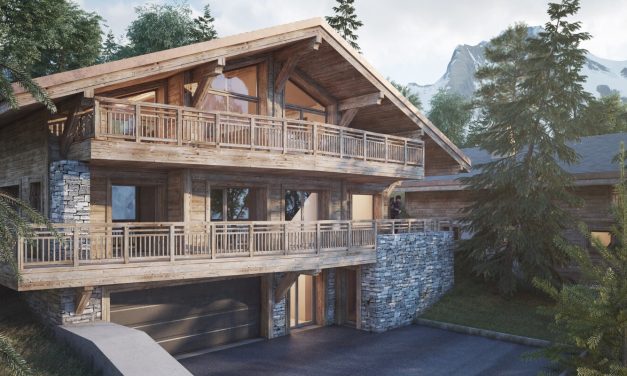
Clos de la Croix Blanche also offers secure underground parking and has been designed to blend sensitively into the environment. Its interiors and fit-outs will be of the same high standard of the Hotel Du Globe, giving you the optimum alpine experience. The Clos has been awarded the kitemark for environmentally-friendly construction by What Green Home.
They have been constructed using the highest quality materials and built with the finest craftsmanship and are available to buy fully furnished or unfurnished. All have under-floor central heating with elegant parquet floors complete with wood stoves or fireplaces. High-quality marble and stone finishes, plus fully-fitted kitchens and bathrooms with the latest appliances complete the chic interior.

The interiors have neutral colour schemes ensuring any furniture and accessories you’d like to introduce will fit easily into their new home. It will house three apartments and three townhouses ranging from 100sqm to 125sqm. Each apartment has a balcony and terrace with spectacular views of the mountains. Prices start at 1,240,000 euros.
Take a deep breath, breathe in the mountain fresh air and be a part of this luxurious alpine dream.
For full details on the Clos de la Croix Blanche please contact: info@home-hunts.com
SPARK AT THE END OF THE YEAR
According to an article last week in The Wall Street Journal, after sharp falls during the credit crisis, prime residential property prices in Europe are beginning to regain their poise, fueled by investor appetite for direct investment opportunities, cheap money and exchange-rate advantages.
  
London is leading the charge, but residential property in Switzerland, Monaco and the South of France is also sparking to life.
Knight Frank stated that 30% of its deals in the prime central London market were sealed in October and September and Savills reported a similar rise in activity during the same period.
Many wealthy buyers are taking advantage of cheap mortgage deals to finance purchases. “Buyers see prime property as a low risk means of generating cheap capital,” said London property consultant Charles McDowell.
Despite the property price difference in 2007, demand for prime properties in Monaco remains buoyant. A number of apartments in the principality were placed on the market for a staggering €50 million last summer, helping to cement Monaco’s reputation as the world’s most expensive place for residential property.
“Demand is coming more for studio and one-bedroom properties, between €1 million to €3 million,” said Jean-Claude Caputo, head of Riviera Estates. Mr Caputo also confirmed the constant demand for the Riviera properties: “International money continues to flow to places like Antibes, St. Tropez and other exclusive areas – this is where the real demand is in the region.”
Tags: currencies direct, luxury property ibiza, luxury ski property, village property in france for sale, winter luxury property Posted in December 2009 Newsletter | Comments Off
|